
Self-Employed Health Insurance Deduction (Form 7206): Who Qualifies and Where to Enter It

Self-Employed Health Insurance Deduction (Form 7206): Who Qualifies and Where to Enter It

The self-employed health insurance deduction on Schedule 1, line 17: medical, dental, vision and certain long-term care premiums for you, your spouse and dependents, limited by net profit and unavailable for months you could join a subsidized employer plan. Form 7206 does the math.
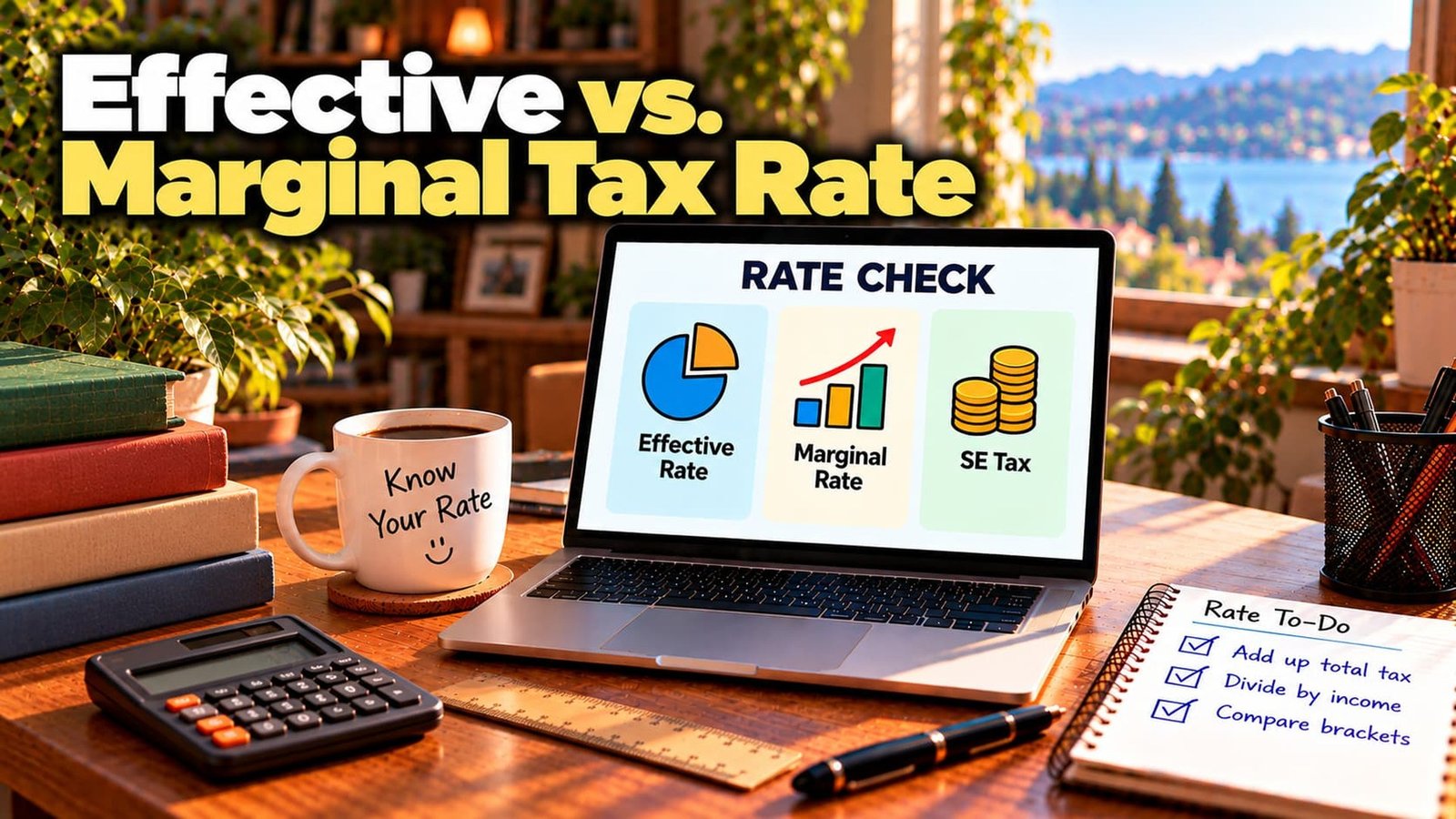

Effective Tax Rate vs. Marginal Rate: How to Calculate Yours (Federal, State, and Self-Employment)

Effective Tax Rate vs. Marginal Rate: How to Calculate Yours (Federal, State, and Self-Employment)

Your marginal tax rate is the rate on your next dollar; your effective rate is your total tax divided by your income. A 2026 worked example for a freelancer with $100,000 of profit shows about 25.7% effective federal tax and about 34.6% marginal, plus how to work backward from a take-home goal.

What Counts Toward Your AGI When You’re Self-Employed

What Counts Toward Your AGI When You're Self-Employed

Quick answer: Your Adjusted Gross Income (AGI) isn’t your Schedule C net profit — it’s that number after a few more subtractions, most notably half your self-employment tax, your self-employed health insurance premiums, and any retirement contributions. AGI is usually meaningfully lower than your net profit, and it’s the figure that determines a lot more … Read more

Schedule C, Line by Line: The Freelancer’s Walkthrough

Schedule C, Line by Line: The Freelancer's Walkthrough

Quick answer: Schedule C is where every 1099 contractor and freelancer reports business income and expenses to the IRS. It has five parts — income, expenses, cost of goods sold, vehicle information, and other expenses — and the bottom line feeds directly into your self-employment tax and income tax. Part I: Income This is your … Read more