
✅ Current for tax year 2026
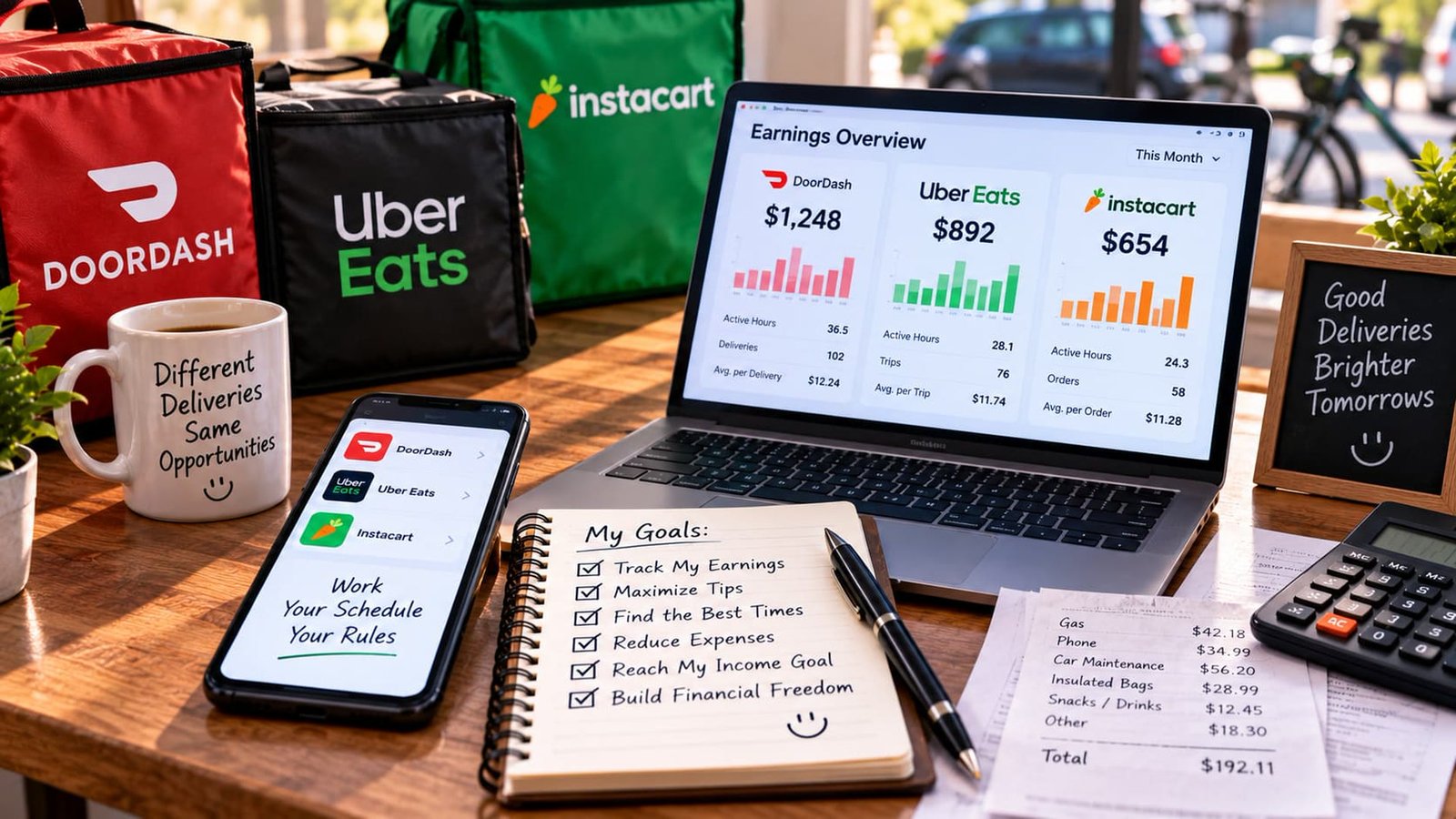
Quick answer: There’s no single honest number — platform pay varies by market, time of day, and demand — but the question that actually matters isn’t “what does the app show,” it’s what’s left after vehicle costs and taxes. That’s the number the calculators on this site are built to show you.
Gross pay vs. what you actually keep
The base pay, tips, and promotions the app displays are your gross earnings — the number on your 1099-NEC or 1099-K at year-end. Two costs come out before you see a real take-home figure: vehicle expenses (mileage, wear, gas) and taxes. See DoorDash Doesn’t Send You a W-2 for why nothing is withheld from any of these platforms’ payouts up front.
The expense side most drivers underestimate
Per-mile driving cost isn’t just what you spend on gas — it includes wear on tires, brakes, and the value the vehicle loses over time. The full DoorDash deduction list breaks down mileage, phone costs, hot bags, and the other real expenses that reduce your taxable income; the same deductions generally apply whether you’re driving for DoorDash, UberEats, or Instacart, since they’re all 1099 independent contractor work reported the same way.
Comparing the three platforms structurally
DoorDash, UberEats, and Instacart all pay through similar mechanics — a base fee plus tips, with occasional promotions layered on top — but they differ in the type of work involved. DoorDash and UberEats are almost entirely restaurant-to-customer deliveries, often shorter trips with faster turnover during meal rushes. Instacart adds a shopping component on top of delivery, meaning more time per order but often a different tip structure. None of this changes how the income is taxed — all three flow through the identical 1099-based Schedule C process — but it’s worth understanding when deciding where to spend a limited number of working hours.

Multi-apping: running several platforms at once
Many drivers run DoorDash, UberEats, and Instacart simultaneously to fill idle time between orders — which helps gross earnings but adds a bit of tax-season complexity: multiple 1099s (or 1099-Ks) arrive from different platforms, but they all still combine into one Schedule C for your business as a whole. Keeping clean records of which deposits came from which platform matters here — see Does the IRS Actually Know About Your Venmo and Cash App Income? for how digital payment tracking factors in if you ever move money between accounts.
Tracking your real numbers as you go
- Log every delivery mile with a dedicated mileage-tracking app, not an end-of-year estimate
- Separate gross platform pay from tips and promotions in your own records, even though they combine on your 1099
- Set aside a percentage of every payout for taxes as it arrives, rather than after a full quarter
- Reconcile each platform’s app-reported earnings against your bank deposits monthly
Why “how much can you make” doesn’t have one answer
Market saturation, time of day, your city’s delivery demand, and your own vehicle’s operating cost all move the real number more than any platform-wide average could. Instead of chasing a headline figure, run your own actual numbers: use the Self-Employment Tax Calculator to see what you’ll owe on what you’ve earned so far, and the Take-Home Pay Calculator to see what’s realistically left over. For a broader look at other gig platforms beyond these three, see Top Gig Economy Apps to Make Extra Money on Your Own Schedule.

How peak hours change the real math
The same hour of driving can produce dramatically different earnings depending on demand. Meal rushes (lunch and dinner windows), weekends, and bad-weather days typically bring higher base pay and more frequent surge or promotional bonuses, while off-peak mid-afternoon hours often mean longer waits between orders for similar per-delivery pay. This is why two drivers working the same total hours in a week can report very different earnings — the hours worked matter less than which specific hours they were.
Vehicle choice and its effect on real profit
A more fuel-efficient vehicle, or a bike/scooter in a dense urban market, can meaningfully change your real per-delivery profit compared to a larger, less efficient vehicle covering the same deliveries — since the mileage deduction is based on actual miles driven, not a flat rate per delivery. Drivers who carefully match their vehicle choice to their specific market (density, delivery distances, weather) tend to see a bigger gap between gross and net earnings close than those who don’t consider this at all.
A simple monthly tracking habit that pays for itself
- Log total miles driven for deliveries each week, not just each shift
- Record gross earnings by platform, even though they’ll combine on one Schedule C
- Note any vehicle maintenance costs as they happen, not reconstructed later
- Set aside a percentage of each week’s gross pay for taxes as it’s earned
- Review your real net-per-hour figure monthly, not just gross
This habit turns “how much can you make” from a guess into an answer specific to your market, your vehicle, and your actual hours — which is the only version of the question that’s actually useful to you.
How platform pay structures have shifted over time
Delivery platforms periodically adjust their pay algorithms, base pay structures, and promotional bonus systems, sometimes significantly. What was true about a specific platform’s pay structure a year or two ago may not hold today — this is exactly why chasing a specific historical earnings figure is less useful than understanding the underlying mechanics (base pay plus tips, minus real vehicle costs, minus taxes) that remain constant even as the specific numbers shift. Drivers who understand the mechanics can adapt quickly when a platform changes its pay structure; drivers chasing a specific dollar figure from an old article or forum post often find themselves confused when reality doesn’t match.
What experienced drivers track beyond simple earnings
Beyond gross pay and mileage, experienced multi-year delivery drivers often track metrics like earnings-per-mile and earnings-per-hour separately by time of day and day of week, building a personal picture of which specific windows are actually worth prioritizing in their market. This level of tracking takes more effort than most casual drivers bother with, but it’s what separates drivers who treat this as a genuine income source worth optimizing from those who drive reactively and never quite understand why some weeks feel far more profitable than others.
What seasonal patterns look like across these platforms
Demand for food and grocery delivery tends to follow predictable seasonal patterns in most markets — busier around major holidays, severe weather events, and local sporting or entertainment events, quieter during typical slow periods like late summer in many regions. Drivers who track their own earnings over a full year, rather than judging the work based on a single strong or weak month, get a much more accurate picture of what the work realistically provides as a income source across an entire year rather than a single snapshot.
This seasonal variation is also worth planning around from a tax perspective — a driver whose income is concentrated in a few strong months benefits from adjusting quarterly estimated payments to match when the income actually arrives, rather than spreading a flat estimate evenly across four quarters that don’t reflect the real pattern. See How to Calculate Quarterly Estimated Taxes for how to adjust for exactly this kind of uneven income.
Bottom line
Gross pay is marketing; net pay is math. Track your miles from day one, understand which platform’s work style fits your schedule, and let your own numbers — not an average you saw online — tell you whether the work is paying off.