
✅ Current for tax year 2026
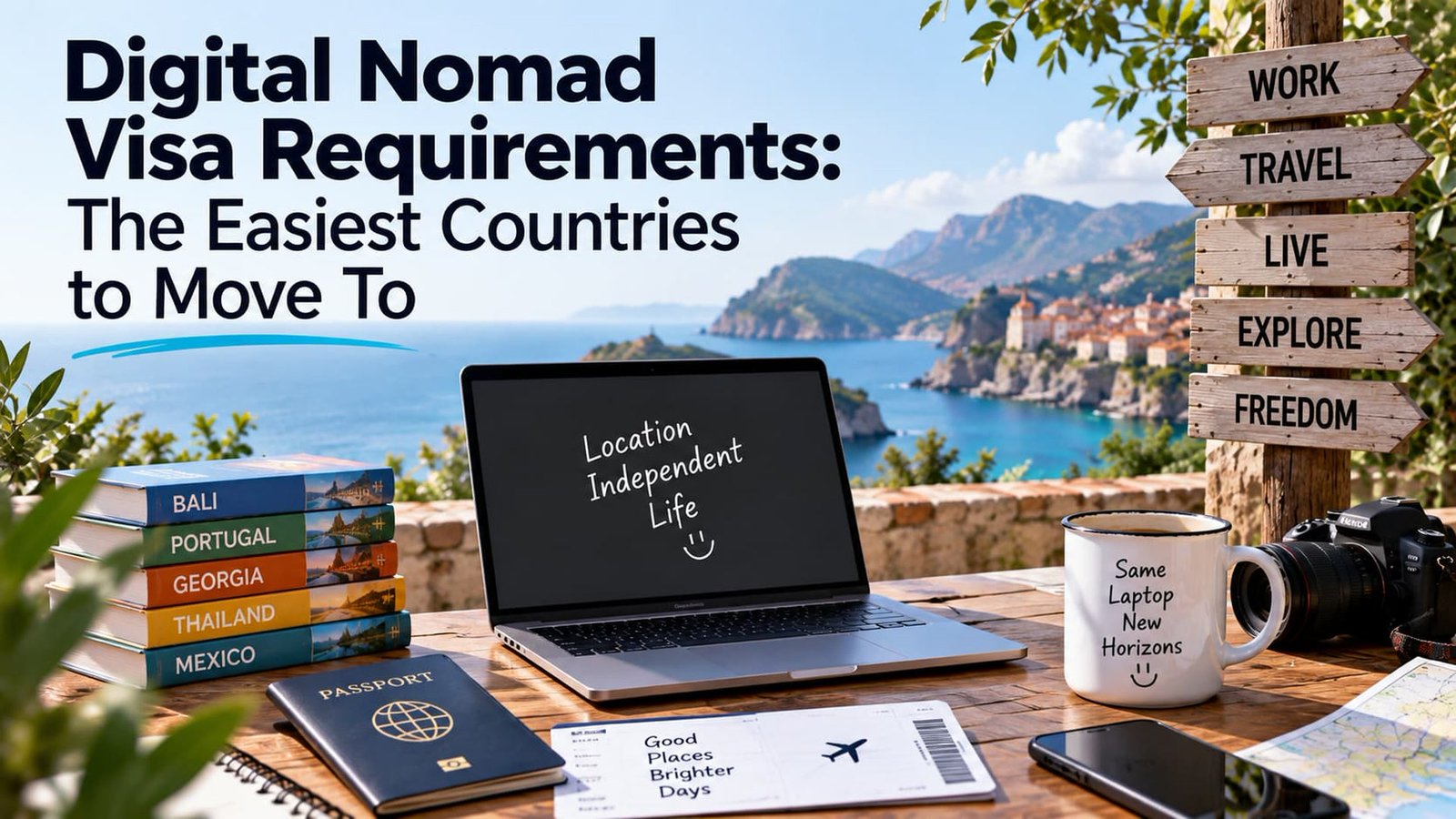
Quick answer: Bali (Indonesia), Portugal, Georgia, Thailand, and Mexico are frequently cited among the more accessible digital nomad destinations — but program details and income thresholds change frequently, so always confirm current requirements directly with the destination’s official immigration site or embassy before making plans. What’s stable is the general pattern most programs follow, and one tax fact that surprises a lot of American remote workers.
What most digital nomad visas generally require
Programs vary by country, but most share a similar shape: proof of remote income above a minimum threshold (often shown through recent bank statements or tax returns), valid health insurance covering your stay, a clean criminal background check, and proof that your income comes from outside the country you’re moving to. Exact dollar thresholds, visa duration, and renewal rules differ significantly and change over time, so treat any specific number you read — including anywhere else on this page — as a starting point to verify, not a final answer.
Bali, Indonesia
Indonesia’s remote-worker visa options have made Bali one of the most talked-about digital nomad hubs, combining a well-established remote-work community and lower cost of living with a genuinely different culture and time zone than most Western nomads are used to. Requirements and the specific visa category have shifted more than once in recent years, so this is a destination where checking the current official program details matters more than usual.
Portugal
Portugal’s D8 digital nomad visa is one of the more established European programs, generally requiring proof of a minimum monthly remote income along with health insurance and accommodation proof. It’s frequently cited as an entry point into the broader Schengen area, which adds appeal beyond Portugal itself.
Georgia
Georgia (the country) has built a reputation as one of the more straightforward entry points for remote workers, historically allowing extended stays for many nationalities with comparatively light bureaucracy — though, as with every country here, specifics should be confirmed directly rather than assumed from general reputation.
Thailand
Thailand’s long-standing appeal to remote workers has been formalized through destination-specific visa programs aimed at attracting longer-term digital nomads, alongside its well-established reputation for affordability and existing remote-work infrastructure in cities like Chiang Mai and Bangkok.
Mexico
Mexico’s Temporary Resident Visa is commonly used by remote workers and is often cited as comparatively accessible for U.S. citizens specifically, given proximity, extended allowable stay periods, and an already well-established expat and remote-work community in cities like Mexico City and Oaxaca.
What stays the same wherever you go
If your income is still self-employment income from U.S. clients or platforms, your self-employment tax obligation and Schedule C filing generally continue regardless of your physical location. Run your numbers through the Self-Employment Tax Calculator before assuming a move abroad changes your U.S. tax bill — for most self-employed nomads, it doesn’t, at least not without specific cross-border planning.
Questions to research before choosing a country
- What is the current minimum income requirement, and how must it be documented?
- What health insurance coverage does the visa require?
- How long can you stay, and what’s the renewal process?
- Does the country tax your worldwide income, or only local-source income?
- Is there a tax treaty between the U.S. and this country that affects double taxation?
- What’s the realistic cost of living relative to your remote income?
Health insurance requirements across these programs
Nearly every digital nomad visa program requires proof of health insurance valid in the destination country, and U.S. domestic health insurance frequently doesn’t qualify — most nomads end up purchasing a separate international or travel health policy specifically to meet this requirement. This is worth budgeting for as a real ongoing cost, not just a one-time visa application item, since most programs require continuous coverage for the duration of your stay, not just proof at the point of application.
What “remote income from outside the country” actually needs to show
Most programs want to see that your income comes from clients, employers, or platforms based outside the country you’re moving to — this is meant to ensure digital nomads aren’t competing for local jobs. Documentation typically includes recent bank statements, client contracts, or tax returns showing the source of income clearly. If your self-employment income comes from a mix of domestic and international clients, check the specific program’s rules about what percentage needs to be foreign-sourced, since this varies by country and isn’t always a strict 100% requirement.
Building a realistic budget beyond the visa itself
- Visa application and any renewal fees
- International health insurance premiums
- Housing costs at your specific destination, not a national average
- A currency-conversion buffer if your income arrives in USD but expenses are in local currency
- A cross-border tax consultation, at least once, before you commit to a longer stay
Time zone considerations that matter more than people expect
If your self-employment income depends on real-time availability for U.S.-based clients — calls, live collaboration, fast turnaround expectations — the time zone difference of your chosen destination matters as much as the visa requirements themselves. Bali and Thailand sit roughly twelve hours from U.S. Eastern time, meaning a genuinely inverted schedule; Portugal and Georgia offer a more moderate five-to-nine-hour difference; Mexico, depending on the specific region, can align closely enough with U.S. time zones to barely disrupt a client-facing schedule at all. Weigh this against the country’s other appeal before assuming any of these destinations will work equally well for your specific client relationships.
Testing a destination before committing long-term
Many successful long-term nomads start with a shorter trial stay — using a standard tourist visa or the destination’s short-stay allowance — before committing to the fuller visa application process and a longer-term move. This lets you validate cost of living, internet reliability, time zone workability, and overall fit before investing in visa paperwork and international health insurance for a stay that might not suit you as well as it looked from research alone.
Banking and payment considerations while abroad
Beyond the visa and tax questions, practical banking matters more than many first-time nomads expect — confirm your U.S. bank and any payment platforms you rely on (including Stripe Express, if relevant to your income — see Stripe Express Guide) work reliably from your destination country, and understand any foreign transaction fees or currency conversion costs that will apply to your regular income and spending while abroad. Some digital nomads maintain a U.S.-based address (through a mail forwarding service, for instance) specifically to keep banking and any state residency questions simpler while living abroad.
Bottom line
Research each country’s current visa requirements directly from official sources — this list changes faster than most articles about it get updated — and talk to a cross-border tax professional before you move if your self-employment income continues while abroad. The visa is often the easier part; the tax planning is where people get caught off guard.
Related guides
- Current Mortgage Rates for the Self-Employed in Essex County
- How to Transition from Full-Time Employee to Successful Freelancer
- MassHealth Guide: How to Provide Proof of Income as an Independent Contractor
- California Self-Employment Tax: What You Owe at the Federal and State Level
- Take-Home Pay Calculator